My Approach/Holistic Healing
Therapy for the whole person.
You are more than a diagnosis, a set of symptoms, or the thing that brought you to therapy.
My approach is integrative, collaborative, trauma-informed, and person-centered. That means we can draw from different therapeutic approaches depending on who you are, what you’re experiencing, and what actually feels useful to you.
There is no one-size-fits-all way to do therapy.
Top-Down & Bottom-Up Healing
Traditional talk therapy often takes a “top-down” approach, working with thoughts, emotions, beliefs, and behaviors to create meaningful change.
But sometimes understanding something intellectually isn’t the same as feeling different.
Bottom-up approaches bring the body and nervous system into the process. They can help us pay attention to physical sensations, emotional activation, patterns of stress, and the ways experiences may show up beyond our thoughts alone.
As a holistic therapist, I integrate both.
Depending on your needs and preferences, our work might include traditional talk therapy alongside approaches such as CBT, Brainspotting, mindfulness, somatic and nervous-system-informed practices, motivational interviewing, EFT tapping, or expressive and experiential techniques.
We don’t need to force one approach to fit everything.
Therapy that makes room for all of you.
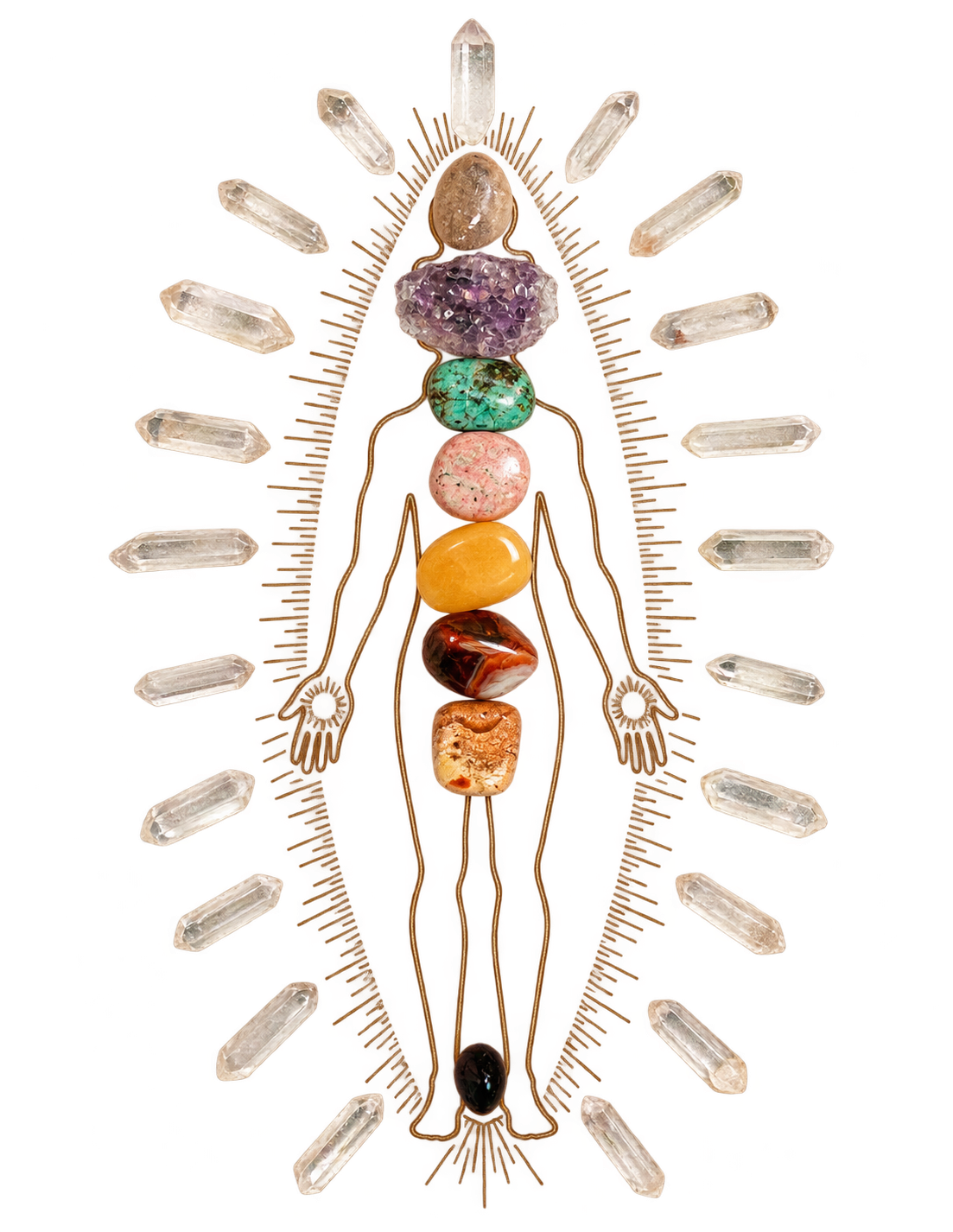
Holistic therapy, to me, means looking at the whole person rather than treating one symptom in isolation.
Your relationships, experiences, environment, values, identity, physical well-being, stress, strengths, beliefs, and the ways you’ve learned to navigate the world can all be part of the picture.
And when it feels meaningful to you, there can also be room for creativity, spirituality, personal beliefs, and complementary reflective practices.
Those things don’t replace psychotherapy or evidence-based treatment. They can simply become additional ways to explore, reflect, connect, and understand yourself.
You get a say in what belongs in your therapy.
You may already have more answers than you think.
I don’t see my role as telling you how to live your life.
Often, we already carry pieces of what we need—insight, strengths, instincts, experiences, values—but those pieces can be difficult to see or put together when we’re overwhelmed, anxious, hurting, disconnected, or stuck.
My role is to help you slow things down, get curious, notice patterns, connect some of those pieces, and build new skills and tools along the way.
Sometimes therapy is about changing something.
Sometimes it’s about understanding something.
Sometimes it’s about learning how to sit with something differently.
And sometimes it’s simply having a space where you don't have to figure everything out alone.
Progress over perfection.
Healing isn’t linear, and therapy isn’t about becoming a perfectly healed version of yourself.
My approach is warm, compassionate, collaborative, and realistic. We can build on the strengths you already have while exploring new ways of relating to your thoughts, emotions, body, relationships, and experiences.
The goal isn’t to turn you into somebody else.
It’s to help you understand yourself more deeply, develop tools that work in your real life, and move toward a life that feels more authentic and fulfilling to you.